
|
|
BIO
Jovian was born in Mexico City in 1965, where he studied International Relations at the Universidad Iberoamericana.
His artistic interests led him to join the field of art, first as a manager and gallerist. Later, in the middle of the last decade, he embarked on a new facet as a plastic artist, venturing into the fields of painting, sculpture, and the creation of objects.
Although his is self-taught, he has sought to reinforce his vocation by participating in various workshops such as the “Des-Construcción” painting workshop given by Mtro. Agustín Castro López, at Los Mangos Library, in Puerto Vallarta, Jalisco, Mexico (2010); The painting workshop “Of the Figurative, the Abstract," led by Mtro. Agustín Castro López, also at Los Mangos Library, Puerto Vallarta, Jalisco, Mexico (2011); the "Anatomy for the Sculptor” workshop,taught by Mtro. Rodrigo Vargas in Mexico City, Mexico and the “Sculpture Techniques and Materials" workshop taught by Mtro. Jonathan Gómez, in Mexico City, Mexico (2012); The “Figurative Modeling with Plasticine” workshop taught by Mtro. Jonathan Gómez, Mexico City, Mexico (2014); the drawing and painting course “Reinterpreting the Human Figure” taught by Mtro. Ulises Licea, in Tepoztlan, Morelos, Mexico (2015); and the “ArtePovera” workshop where they created painting, sculpture and objectswith waste materials, taught by Mtro. Ulises Licea in the garbage dumps of Ciudad Nezahualcoyotl, of the State of Mexico, Mexico (2016).
His artistic work is known for its infiltration of multiple techniques and materials within a sculpture. His themes reflect his capacity for transformation and abstraction, through which he addresses current issues and social interests, with powerful and lively creations that put him in the vanguard of the artistic postmodernity of the country.
Currently his work is exhibited at the Patrimonial Acquis of the Ministry of Finance and Public Credit (Secretaría de Hacienda y Crédito Público) and has formed part of the Payment in Kind Program (Programa de Pago en Especie) since 2017.
His artistic interests led him to join the field of art, first as a manager and gallerist. Later, in the middle of the last decade, he embarked on a new facet as a plastic artist, venturing into the fields of painting, sculpture, and the creation of objects.
Although his is self-taught, he has sought to reinforce his vocation by participating in various workshops such as the “Des-Construcción” painting workshop given by Mtro. Agustín Castro López, at Los Mangos Library, in Puerto Vallarta, Jalisco, Mexico (2010); The painting workshop “Of the Figurative, the Abstract," led by Mtro. Agustín Castro López, also at Los Mangos Library, Puerto Vallarta, Jalisco, Mexico (2011); the "Anatomy for the Sculptor” workshop,taught by Mtro. Rodrigo Vargas in Mexico City, Mexico and the “Sculpture Techniques and Materials" workshop taught by Mtro. Jonathan Gómez, in Mexico City, Mexico (2012); The “Figurative Modeling with Plasticine” workshop taught by Mtro. Jonathan Gómez, Mexico City, Mexico (2014); the drawing and painting course “Reinterpreting the Human Figure” taught by Mtro. Ulises Licea, in Tepoztlan, Morelos, Mexico (2015); and the “ArtePovera” workshop where they created painting, sculpture and objectswith waste materials, taught by Mtro. Ulises Licea in the garbage dumps of Ciudad Nezahualcoyotl, of the State of Mexico, Mexico (2016).
His artistic work is known for its infiltration of multiple techniques and materials within a sculpture. His themes reflect his capacity for transformation and abstraction, through which he addresses current issues and social interests, with powerful and lively creations that put him in the vanguard of the artistic postmodernity of the country.
Currently his work is exhibited at the Patrimonial Acquis of the Ministry of Finance and Public Credit (Secretaría de Hacienda y Crédito Público) and has formed part of the Payment in Kind Program (Programa de Pago en Especie) since 2017.
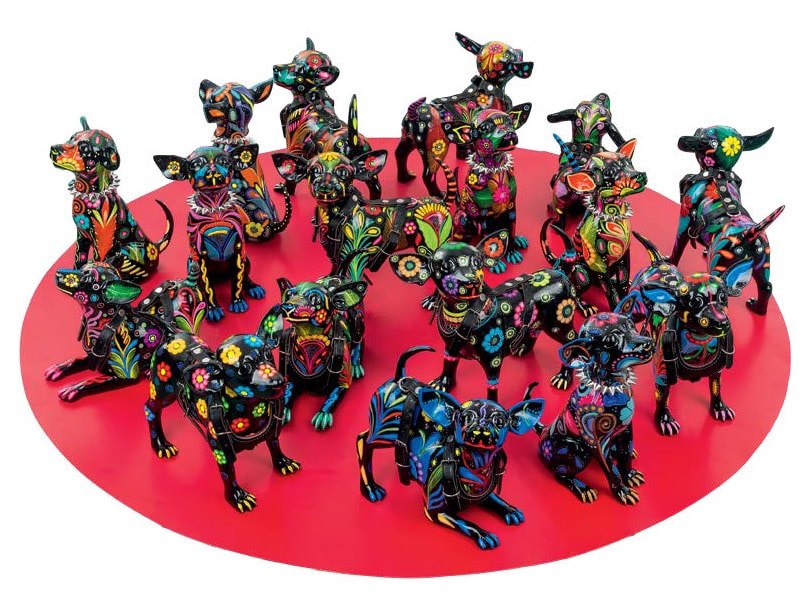
ONE HUNDRED PERCENT MEXICAN- RESIN- POLIPTICO
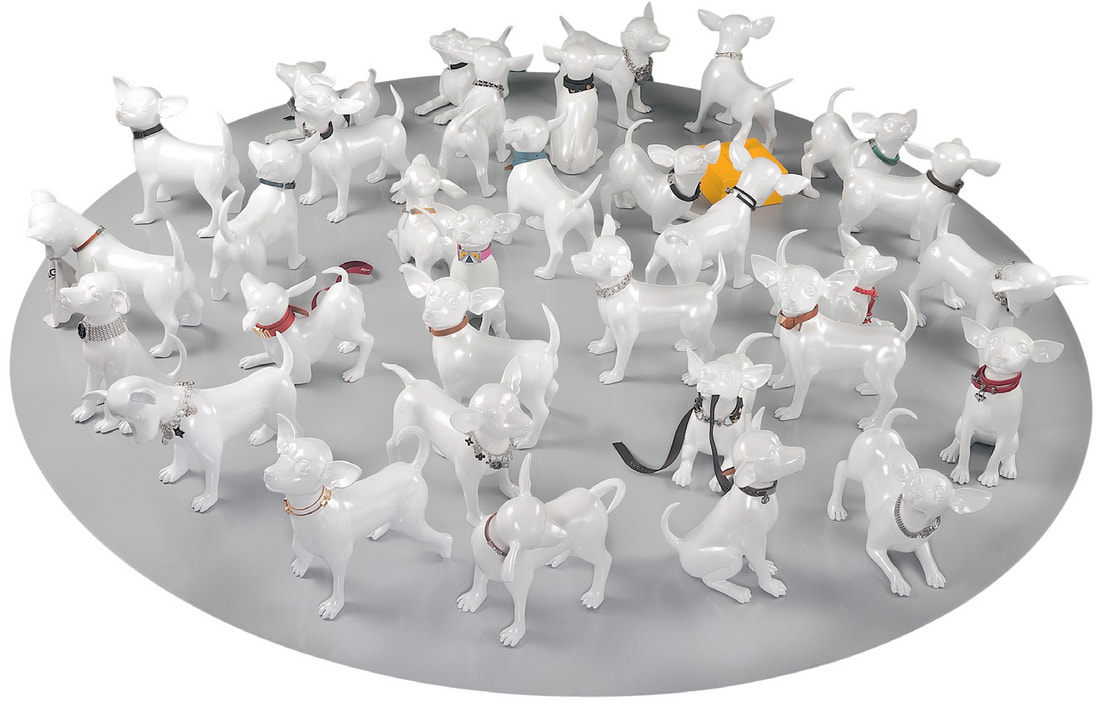
DE COMPRAS- POLIPTICO- 35 OBRAS-180X70CM
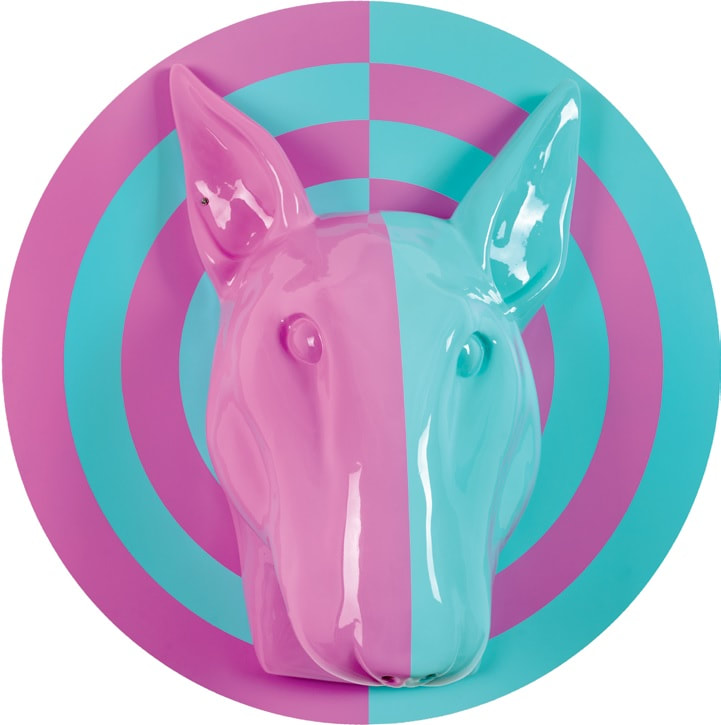
Neville. Polímero pátina en frío, 100 x 100 x 36 cms. 2018
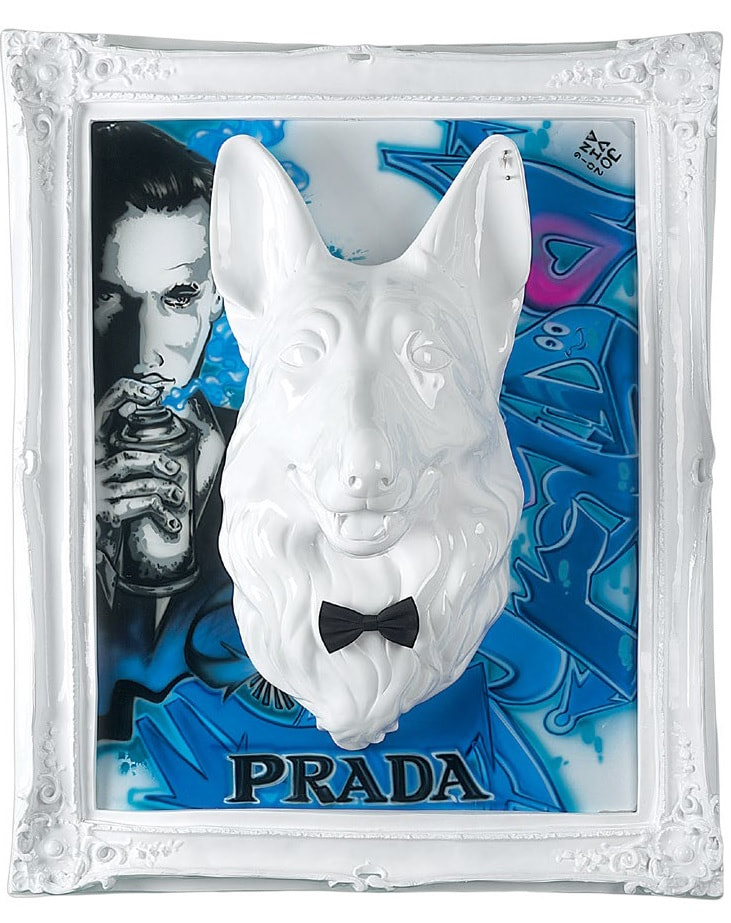
MARIO- 124x104x43CM- Polímero pátina en frío y objetos diversos-2016
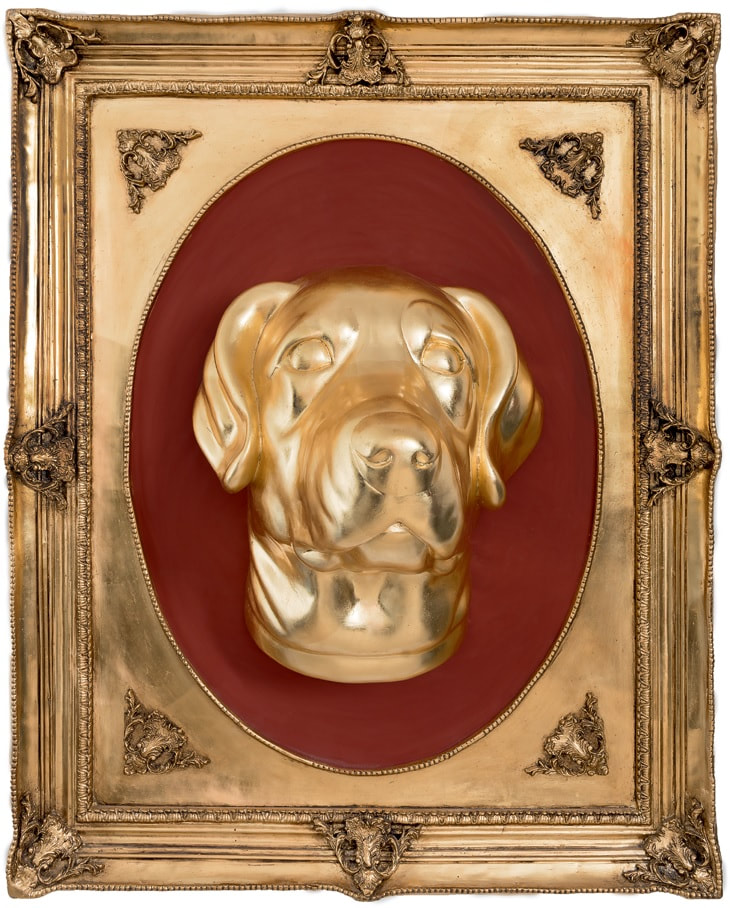
Oro precolombino Farouq. Polímero hoja de oro, 103 x 109 x 42 cms. 2018
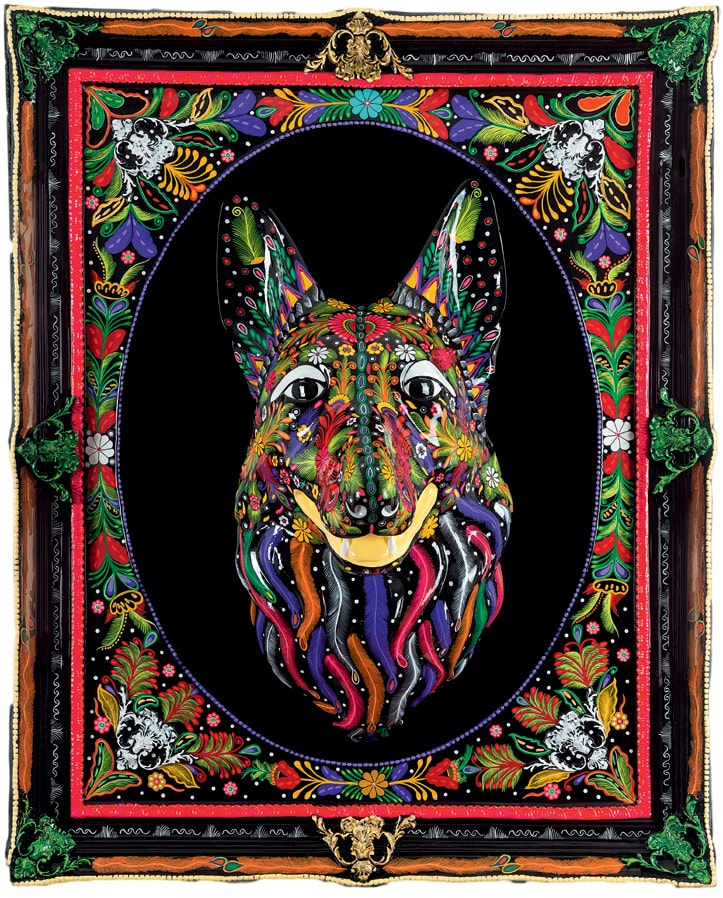
Félix. Polímero pátina en frío, 133 x 109 x 48 cm. 2018
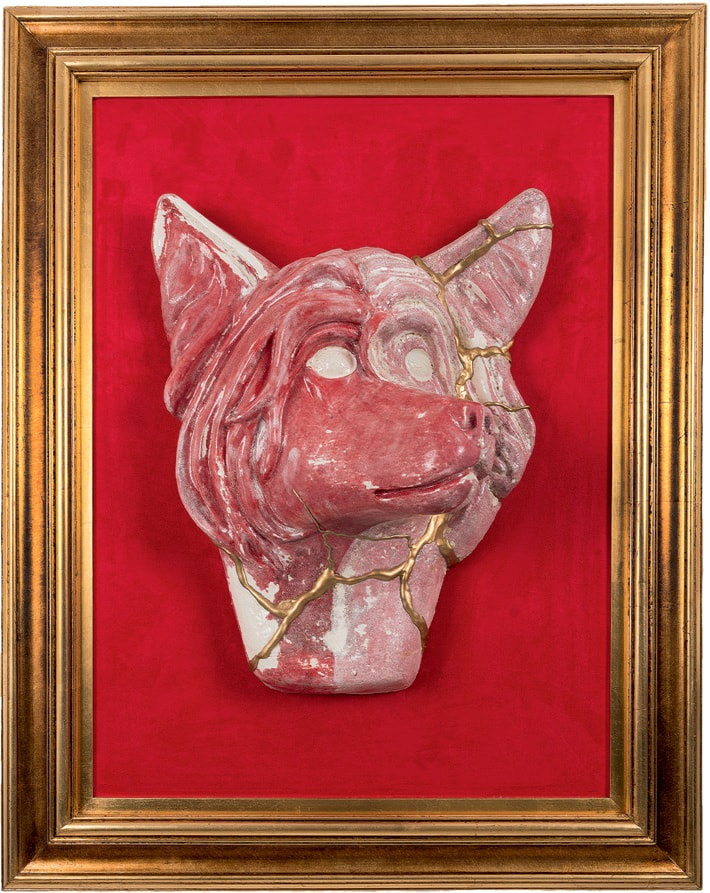
Heridas I. Barro de Zacatecas esmaltado, 129 x 103 x 38 cms. 2018
EXHIBITIONS
He has participated in several collective exhibitions and art fairs, such as the Affordable Art Fair, at Expo Reforma, in Mexico City (2012); the Affordable Art Fair, F1 Pit Building, in Singapore, in the Republic of Singapore; the Affordable Art Fair, Reforma Expo, in Mexico City (2014); the Asia Contemporary Art Show, in Conrad Hong Kong, in Hong Kong, of the People’s Republic of China; the Affordable Art Fair, in Hong Kong, of the People’s Republic of China; the Anniversary Collective 13, at the Corsica Gallery, in Puerto Vallarta, Jalisco, Mexico; the Convention and Exhibition Center, in Hong Kong (2015); “Glam”, at the South Side Gallery, in Puerto Vallarta, Jalisco, Mexico; the Anniversary Collective 13, at the Corsica Gallery, in Puerto Vallarta, Jalisco, Mexico; the Asia Contemporary Art Show, in Conrad Hong Kong, Hong Kong, of the People’s Republic of China (2016); the Sensible, at the Art Museum of the Ministry of Finance and Public Credit, Mexico City; Zero Discrimination, at the House Q, Mexico City; Arte / Sano 5.0, Biennial, at the Museum of Popular Art, in CDMX, Mexico; the Collective of Anniversary 13, at Corsica Gallery, in Puerto Vallarta, Jalisco, Mexico (2017).
He has also participated in several individual exhibitions, as follows: “ Pop Icons”, at the Corsica Gallery, in Puerto Vallarta, Jalisco, Mexico and San Jose del Cabo, Baja California Sur, Mexico (2012); “ Divas’,at the Corsica Gallery, in Puerto Vallarta, Jalisco, Mexico and San Jose del Cabo, Baja California Sur, Mexico (2013); “Objects,” at the Corsica Gallery, in Puerto Vallarta, Jalisco, Mexico and San Jose del Cabo, Baja California Sur, Mexico (2014); “Fashion Victims”, at the Asia Contemporary Art Show, in Hong Kong, of the People’s Republic of China; “Sueños de Papel”, at the Corsica Gallery, in Puerto Vallarta, Jalisco, Mexico and San Jose del Cabo, Baja California Sur, Mexico (2016); “Bronze”, at the Corsica Gallery, in Puerto Vallarta, Jalisco, Mexico; “Fashion Victims”, at the South Side Gallery, Puerto Vallarta,
Jalisco, Mexico (2017); “Jovian”, at the Hotel Me Los Cabos; Cabo San Lucas, Baja California Sur, Mexico; “All About Dogs”, at Corsica Gallery, in Puerto Vallarta, Jalisco, Mexico; “Tattooed” , at the South Side Gallery, in Puerto Vallarta, Jalisco, Mexico; and “Fashion Victims”, at the Museum of the City of Mérida, in Yucatán, México (2018). "All about Dogs" at Galeria Golden Section, in Puerto Vallarta, Jalisco, Mexico (2025)
He has also participated in several individual exhibitions, as follows: “ Pop Icons”, at the Corsica Gallery, in Puerto Vallarta, Jalisco, Mexico and San Jose del Cabo, Baja California Sur, Mexico (2012); “ Divas’,at the Corsica Gallery, in Puerto Vallarta, Jalisco, Mexico and San Jose del Cabo, Baja California Sur, Mexico (2013); “Objects,” at the Corsica Gallery, in Puerto Vallarta, Jalisco, Mexico and San Jose del Cabo, Baja California Sur, Mexico (2014); “Fashion Victims”, at the Asia Contemporary Art Show, in Hong Kong, of the People’s Republic of China; “Sueños de Papel”, at the Corsica Gallery, in Puerto Vallarta, Jalisco, Mexico and San Jose del Cabo, Baja California Sur, Mexico (2016); “Bronze”, at the Corsica Gallery, in Puerto Vallarta, Jalisco, Mexico; “Fashion Victims”, at the South Side Gallery, Puerto Vallarta,
Jalisco, Mexico (2017); “Jovian”, at the Hotel Me Los Cabos; Cabo San Lucas, Baja California Sur, Mexico; “All About Dogs”, at Corsica Gallery, in Puerto Vallarta, Jalisco, Mexico; “Tattooed” , at the South Side Gallery, in Puerto Vallarta, Jalisco, Mexico; and “Fashion Victims”, at the Museum of the City of Mérida, in Yucatán, México (2018). "All about Dogs" at Galeria Golden Section, in Puerto Vallarta, Jalisco, Mexico (2025)
Jovian, Fashion Victims by RAFAEL PÉREZ Y PÉREZ
We live in a dangerous time. The human being haslearned to dominate Nature before learning to dominate himself
Albert Schueitzer
Jovian’s work is based on a contemporary social habit that has placed human beings on a parallel level with the animal kingdom; that is to say, anthropomorphism, or rather, the attribution of qualities and characteristics of humans to animals. It’s important to remember that the origin of this relationship between man and dog can be traced back for more than 15,000 years, culminating in their current place as a fixed addition of family life. Before that, dogs were bred with more practical objectives, like hunting or herding, and predisposition or ability for work had a much higher value than appearance.
Nevertheless, today, many owners of these four-legged companions have the habit of humanizing animals and assigning them with human characteristics where there are none. For some, this humanizing of their pets is taken to the extreme and seems to stem from various psychological aspects like loneliness, lack of affection, death, etc.
This unbalanced tendency of placing such value on their furry friends has created a market of accessories and luxury and vanity services in the form of restaurants, schools, event organizers, clubs, hair stylists, clothing stores, and other businesses dedicated to subjecting pets to human-type activities.
There is no doubt that animals have often served to protect or accompany us, and their value is indisputable as respected and trained assets, yet it is now common to see amongst the urban crowd of passersby the occasional owner promenading his pet with an excessive display of garments and accessories proper to humans, not dogs. Everything tailor-made to fit their furry companion; they parade an array of skirts, capes, hats, glasses, etc. An example of this is Zola Ceaușescu, the daughter of the communist dictator Nicolae Ceaușescu, who would dress her pet with an expensive diamond collar.
This creator’s work begins by questioning the logic of this contemporary way of treating pets, while focusing on the evidential use of dogs as the victim of the owner’s personal tastes in lines and brands of fashion (be it Hermes, Louis Vuitton, Christian Dior, Versace, Armani, or Chanel). On the other hand, his pieces go beyond the evident and take on
The theme of genetic modification, a practice that humans have been exerting on other species for centuries, especially on their canine friends, who are the victims of genetic morphing manipulation with the goal of making them faster, fatter, taller, smaller, or thinner so that they appear more beautiful or “esthetic” in the eyes of their owners or the marketable demands of the times.
In the actual result that the artist transposes, we can appreciate a kitsch style. Take on this practice, as it portrays a society where the consumerism of artificiality is represented by the three-dimensional heads of the dogs as portraits made upon request. And although the beauty of these characters creates a counterpoint to the concept, from a contemporary point of view, this series of works shows a critical discourse about this social problem with the “cute” and “kitsch” aspects of the pieces, on a more complex issue. So it must be looked at in a metaphorical or meta-linguistic manner since the excess there manifests it.
This practice now referred to under the concept of “dogs by design” or “genetic edition” serves to create personalized prototypes that have developed or been recreated by the selective crossing of specimens with the goal of realizing one characteristic or another of the breed in question. Those in favor of this practice argue that through their manipulation they are improving the pedigree when in reality they are charging the breeds with a heavy load on their health, condemning the dogs to a life of suffering for the sake of appearances.
This decadent practice, used as an eccentric evasion from the esthetic, appears as a degeneration of social taste, extracted and exalted in Jovian’s alto-relieves as he attempts to finalize his figurative language, provoking through forms and images that arise from mass communication media and thereby establishing a clear link to pop art in its character as a chronicle of a valid reality. In this way, Jovian’s reliefs, created with current materials like polymers, are also the result of ample experience in aesthetic themes since his career as a cultural manager allows him to understand current urban culture, which appears in his work through graffiti or inscriptions with critical or humorous content over the surface of his pieces and their background supports.
This then gives him an effective stance within the present critical civilization. Also considering but in a counter position to the socio-aesthetic tastes of the high bourgeoisie who grant him the inscriptions of lexical elements and the visuals of graffiti, “decorating” his pieces with costume jewelry that underlines the consumerism of brands and logos of “haute couture” while hinting at the cheesy or overdone sentimentality of that which wants to appear elegant or refined in its taste in fashion, thus achieving pieces with a very integrated diversity of voices and discourses. In other words, it succeeds in presenting a coexistence of different themes within a unique linguistic code and permits the spectator, given its polysemic character, a variety of reflections and interpretations.
This is how Jovian presents us with the dissolution of usual patterns of one-dimensional human behaviors, focused on the current trends of using animals in relation to objects and communicational situations in order to elicit a perceptive and reflective form of learning.
Albert Schueitzer
Jovian’s work is based on a contemporary social habit that has placed human beings on a parallel level with the animal kingdom; that is to say, anthropomorphism, or rather, the attribution of qualities and characteristics of humans to animals. It’s important to remember that the origin of this relationship between man and dog can be traced back for more than 15,000 years, culminating in their current place as a fixed addition of family life. Before that, dogs were bred with more practical objectives, like hunting or herding, and predisposition or ability for work had a much higher value than appearance.
Nevertheless, today, many owners of these four-legged companions have the habit of humanizing animals and assigning them with human characteristics where there are none. For some, this humanizing of their pets is taken to the extreme and seems to stem from various psychological aspects like loneliness, lack of affection, death, etc.
This unbalanced tendency of placing such value on their furry friends has created a market of accessories and luxury and vanity services in the form of restaurants, schools, event organizers, clubs, hair stylists, clothing stores, and other businesses dedicated to subjecting pets to human-type activities.
There is no doubt that animals have often served to protect or accompany us, and their value is indisputable as respected and trained assets, yet it is now common to see amongst the urban crowd of passersby the occasional owner promenading his pet with an excessive display of garments and accessories proper to humans, not dogs. Everything tailor-made to fit their furry companion; they parade an array of skirts, capes, hats, glasses, etc. An example of this is Zola Ceaușescu, the daughter of the communist dictator Nicolae Ceaușescu, who would dress her pet with an expensive diamond collar.
This creator’s work begins by questioning the logic of this contemporary way of treating pets, while focusing on the evidential use of dogs as the victim of the owner’s personal tastes in lines and brands of fashion (be it Hermes, Louis Vuitton, Christian Dior, Versace, Armani, or Chanel). On the other hand, his pieces go beyond the evident and take on
The theme of genetic modification, a practice that humans have been exerting on other species for centuries, especially on their canine friends, who are the victims of genetic morphing manipulation with the goal of making them faster, fatter, taller, smaller, or thinner so that they appear more beautiful or “esthetic” in the eyes of their owners or the marketable demands of the times.
In the actual result that the artist transposes, we can appreciate a kitsch style. Take on this practice, as it portrays a society where the consumerism of artificiality is represented by the three-dimensional heads of the dogs as portraits made upon request. And although the beauty of these characters creates a counterpoint to the concept, from a contemporary point of view, this series of works shows a critical discourse about this social problem with the “cute” and “kitsch” aspects of the pieces, on a more complex issue. So it must be looked at in a metaphorical or meta-linguistic manner since the excess there manifests it.
This practice now referred to under the concept of “dogs by design” or “genetic edition” serves to create personalized prototypes that have developed or been recreated by the selective crossing of specimens with the goal of realizing one characteristic or another of the breed in question. Those in favor of this practice argue that through their manipulation they are improving the pedigree when in reality they are charging the breeds with a heavy load on their health, condemning the dogs to a life of suffering for the sake of appearances.
This decadent practice, used as an eccentric evasion from the esthetic, appears as a degeneration of social taste, extracted and exalted in Jovian’s alto-relieves as he attempts to finalize his figurative language, provoking through forms and images that arise from mass communication media and thereby establishing a clear link to pop art in its character as a chronicle of a valid reality. In this way, Jovian’s reliefs, created with current materials like polymers, are also the result of ample experience in aesthetic themes since his career as a cultural manager allows him to understand current urban culture, which appears in his work through graffiti or inscriptions with critical or humorous content over the surface of his pieces and their background supports.
This then gives him an effective stance within the present critical civilization. Also considering but in a counter position to the socio-aesthetic tastes of the high bourgeoisie who grant him the inscriptions of lexical elements and the visuals of graffiti, “decorating” his pieces with costume jewelry that underlines the consumerism of brands and logos of “haute couture” while hinting at the cheesy or overdone sentimentality of that which wants to appear elegant or refined in its taste in fashion, thus achieving pieces with a very integrated diversity of voices and discourses. In other words, it succeeds in presenting a coexistence of different themes within a unique linguistic code and permits the spectator, given its polysemic character, a variety of reflections and interpretations.
This is how Jovian presents us with the dissolution of usual patterns of one-dimensional human behaviors, focused on the current trends of using animals in relation to objects and communicational situations in order to elicit a perceptive and reflective form of learning.
Algunos Derechos Reservados © 2026